
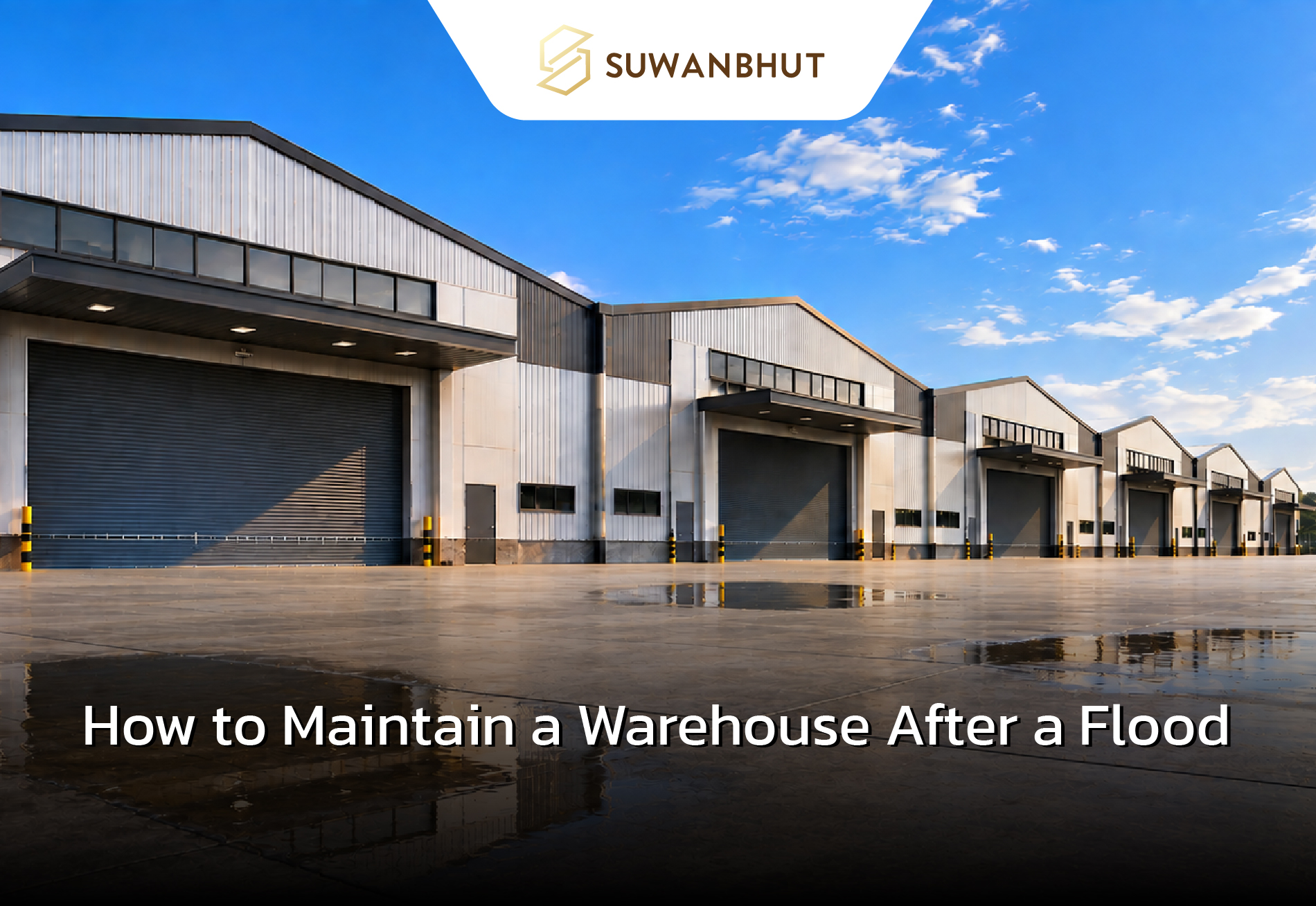
Flood damage doesn’t stop when the water goes in. After the water recedes, lingering moisture can cause mold, rust, and odor within just a few days. A systematic recovery plan helps reduce repair costs, cut downtime, and get your warehouse back into safe operation faster.
1. Check Safety Before Entering the Site (Safety First)
Don’t rush back into the warehouse as soon as the water starts to recede. Always assess the site from outside first.
- Check the water level and the condition of the building from outside; avoid areas that are still flooded or slippery.
- Wear personal protective equipment (PPE) such as rubber boots, rubber gloves, and a mask that protects against dust and mold.
- Watch out for dangerous animals, such as snakes, that may have taken shelter during the flood.
- Department of Disaster Prevention and Mitigation (DDPM) hotline 1784, and the Thai Meteorological Department
2. Inspect the Electrical System Before Powering Up (Electrical Safety)
This is the most dangerous step. Distribution boards, wiring, outlets, and any electrical equipment that touched water can have a leakage current with no warning sign.
- The main distribution board (MDB), wiring, outlets, and meters must be inspected and insulation-tested by a qualified electrician before use.
- Wet machinery, motors, electric forklifts, and conveyor belts must be checked before being switched back on.
- Provincial Electricity Authority (PEA) hotline 1129, for meter or power-supply issues.
Caution: Do not switch on breakers or plug in equipment yourself until a technician confirms it is safe.
3. Inspect the Structure and Floor (Structural Inspection)
Prolonged standing water can change the soil condition beneath the foundation. Watch for the following:
- Cracks in the concrete floor, walls, and columns.
- Sinking or settling of the floor near doorways and parking areas.
- Roller shutters, door tracks, and hinges that are warped or rusted.
- Roof, ceiling, and joints where moisture may have accumulated.
If serious damage is found, have a civil engineer assess the building, especially the floor load capacity, before moving heavy goods back into storage.
4. Drain Water and Clean the Area Quickly (Drainage & Mud Removal)
- Use a water pump to drain standing water and lower the level gradually — pumping too fast can cause uneven pressure that damages walls or floors.
- Remove mud before it dries and hardens onto the floor.
- Wash the floor with a high-pressure clean water spray.
The faster water and mud are removed, the less moisture and odor build up afterward.
5. Clean and Disinfect (Cleaning & Disinfection)
Floodwater often carries contaminants into the building.
- Wash floors, walls, columns, and racking with an appropriate cleaning agent, then disinfect areas that were in direct contact with floodwater.
- Focus on areas staff touch often, such as restrooms, break rooms, and door handles.
- Have staff wash their hands frequently and be careful with open wounds, due to the risk of leptospirosis and skin infections. See more guidance from the Department of Disease Control.
6. Inspect Goods and Materials in the Warehouse (Inventory Assessment)
- Photograph and video everything before moving or discarding items, to use as evidence for an insurance claim.
- Sort goods into three groups: usable as normal / needs further inspection / damaged or contaminated.
- Food, medicine, cosmetics, and chemicals that were in contact with floodwater should not be sold again.
- Wet wooden pallets and cardboard boxes tend to harbor mold and should be replaced.
- Keep a written record of the damaged items and their value.
7. Check the Drainage System Around the Warehouse (Drainage System Check)
Repeat flooding is often caused by blocked drains, not just heavy rain.
- Inspect catch basins, drainage pipes, and drainage channels around the building.
- Clear out sediment, debris, and any blockage.
- Check roof gutters and downpipes.
- Test the backup water pump so it is ready before the next rain.
Choose the Suwanbhut Project — Never Worry About Flooding Again
The Suwanbhut Project is a warehouse development that has never flooded. You won’t need to spend time or budget recovering a warehouse after a flood — your goods stay safe and your business keeps running without interruption.
Interested in renting a warehouse or factory in Bang Phli, Samut Prakan? Contact the Suwanbhut Project today: View project details and contact us
Government resources: DDPM | Thai Meteorological Department | Department of Disease Control | PEA