

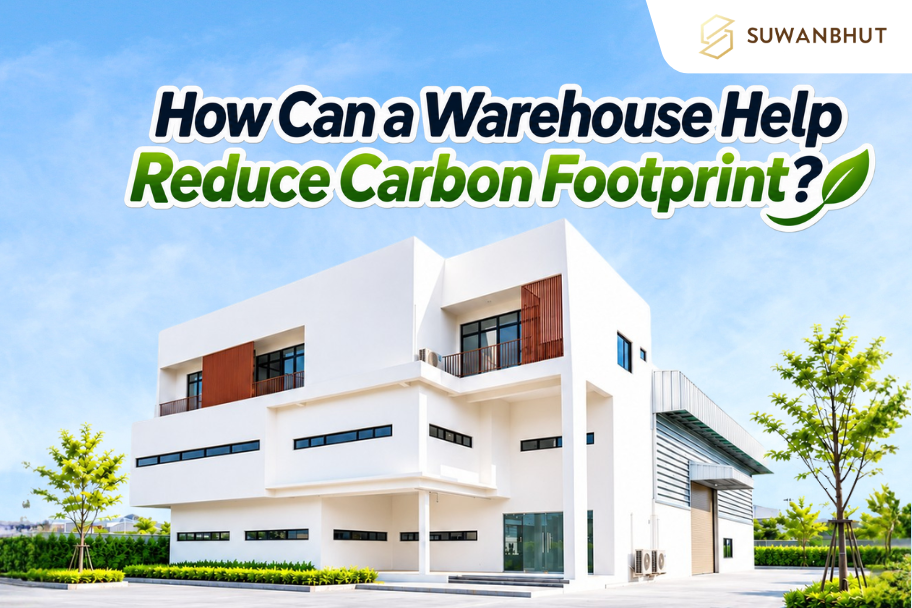
Businesses around the world must adapt to a low-carbon economy. Warehouses, distribution centers, and factories have become one of the places where greenhouse gas emissions can be reduced in a concrete way, from building design and energy choices to location.
1. What Is a Carbon Footprint?
A carbon footprint is the amount of greenhouse gases generated by the activities of an individual, organization, or product, both directly, such as burning fuel, and indirectly, such as using electricity, transportation, and producing materials. It is measured in units of carbon dioxide equivalent (CO₂e).
Why this matters
- International requirements and measures: Trading partners in many markets are starting to require suppliers to report or reduce carbon emissions, including carbon-related trade measures.
- Energy costs: Reducing energy use means lowering long-term expenses at the same time.
- Image and credibility: Customers and investors value businesses with a clear ESG approach.
2. How Good Warehouse Design Reduces Energy Use
Design the space to make worthwhile use of it
A warehouse with a well-planned layout, and with ceiling height and usable area suited to the type of goods, allows more to be stored without expanding the footprint, reduces the waste of construction materials, and lowers the cooling or ventilation load per unit of goods.
Placement of skylights and ventilation systems
Designing for natural light, such as translucent roof sheets, helps reduce daytime lighting, while good ventilation, both natural vents and roof exhaust fans, helps reduce heat accumulation inside the building, which is very important for a tropical country like Thailand.
Choosing suitable construction materials
Roof and wall materials that reflect heat or have thermal insulation lower the temperature inside the warehouse, so less energy is needed to control the environment. In addition, durable materials reduce the frequency of repairs and replacement, which is another way of reducing carbon indirectly.
Installing Solar Rooftop to generate electricity
Warehouse roofs usually have wide, open areas, which makes them ideal for installing solar panels to generate electricity for the business’s own use without needing additional land.
Electricity from a Solar Rooftop system reduces the amount of electricity that must be purchased from the grid, part of which is generated from fossil fuels, directly lowering the greenhouse gas emissions from the organization’s electricity use.
Choosing a warehouse whose roof structure is strong enough, with a suitable orientation and area, makes it easier for operators to add a solar system in the future, reduce electricity costs over the long term, and prepare for sustainability standards that will become stricter.
3. Lighting and Energy-Saving Equipment Inside the Warehouse
Choosing LED lighting
LED lamps use significantly less energy than conventional lamps, last longer, and give off less heat, reducing both electricity costs and the heat-removal load in the warehouse.
Using automatic lighting controls
Motion sensors, dimming systems, and timers allow lights to be switched on only in areas actually in use, especially in large warehouses where some zones are not in use all the time.
4. Managing Storage Space Efficiently
Reduce wasted storage space
Arranging racks and aisles systematically and making use of the warehouse’s height allows more goods to be stored in the same area, reducing the need to rent or build additional space.
Plan goods movement appropriately
Arranging goods by frequency of dispatch, placing fast-moving goods close to the loading doors, helps reduce the distance forklifts travel and reduces the fuel or electricity used by equipment.
Reduce energy use from unnecessary operations
Planning receiving and dispatching cycles, consolidating transport trips, and switching off idle equipment all help reduce energy wasted each day, and accumulate into clear results over the long term.
5. How Warehouse Location Helps Reduce Greenhouse Gas Emissions
Reduce the transport distance of goods
Transport is a major source of greenhouse gas emissions in the supply chain. A warehouse near customers, markets, or manufacturing plants reduces distances and the number of trips, which means less fuel use and lower carbon emissions.
Connect to logistics routes and ports
A location with convenient access to main roads, expressways, and ports reduces detours and accumulated time in traffic, especially for import-export businesses that need to connect with sea and air transport.
A location near industrial areas improves distribution efficiency
Being located near industrial clusters allows faster receiving of raw materials and distribution of goods, makes it easier to consolidate transport trips, and reduces logistics costs along with greenhouse gas emissions.
6. Choosing a Warehouse That Meets Both Business and Environmental Needs
- Consider the design and usable space (article in Thai). Check the ceiling height, floor layout, skylights, ventilation system, and suitability for your business’s type of goods.
- Choose a location suited to transport. Compare the distances to customers, ports, airports, and industrial areas, to reduce transport costs and carbon emissions.
- Look for a warehouse that can support clean energy systems. Ask about the strength of the roof structure, the installation area, and the various permit conditions, so that you can build on this in the future.
7. How the Suwanbhut Project Supports Reducing Your Carbon Footprint
- A location in Samut Prakan Province, connected to Bangkok, Khlong Toei Port, and Suvarnabhumi Airport, which supports goods distribution and reduces transport distances.
- Warehouse and factory spaces designed to suit business use (page in Thai), supporting storage, production, and goods handling with flexibility.
- Support for adding a Solar Rooftop later. Operators can plan to generate electricity from solar energy to reduce costs and carbon over the long term.
- Support for the idea of running a business efficiently and with care for the environment, helping organizations move toward their sustainability goals in a concrete way.
Summary
A good warehouse is not just a storage space but part of a sustainable business: from energy-saving design, a roof ready for clean energy, efficient lighting, and smart space management, to a location that reduces transport distances. Every element helps reduce an organization’s carbon footprint.
Choosing the right warehouse today is therefore an investment that lowers costs, increases competitiveness, and builds a sustainable future for the business and the environment at the same time.
Frequently Asked Questions (FAQ) – How Can a Warehouse Help Reduce Your Carbon Footprint?
Q: What does a warehouse’s carbon footprint mean?
A: A warehouse’s carbon footprint refers to the total greenhouse gas emissions generated by its operations, both directly and indirectly. These include electricity consumption, cooling systems, goods transportation, and construction materials. Reducing energy consumption and managing warehouse space efficiently can help businesses lower their overall carbon emissions.
Q: What warehouse design features help save energy and reduce carbon emissions?
A: An energy-efficient warehouse should have a well-planned layout, sufficient ceiling height, natural lighting, and effective ventilation. Using heat-reflective or insulated roofing and wall materials can also help reduce indoor temperatures and lower the electricity required for lighting, cooling, and ventilation.
Q: How does installing a Solar Rooftop system on a warehouse help reduce its carbon footprint?
A: A Solar Rooftop system generates electricity from sunlight for business operations, reducing the amount of electricity purchased from the power grid, which is partly generated using fossil fuels. This helps lower greenhouse gas emissions associated with electricity consumption while reducing long-term energy costs.
Q: How can switching to LED lighting reduce warehouse operating costs?
A: LED lights consume less electricity than conventional lighting, have a longer lifespan, and generate less heat. These benefits help reduce electricity bills, lower the cooling load inside the warehouse, and decrease the frequency of lighting equipment replacements.
Q: How does efficient warehouse storage management help reduce carbon emissions?
A: Organizing storage racks and aisles systematically while making full use of the warehouse’s vertical space increases storage capacity without requiring additional space. Placing fast-moving goods near loading areas also reduces forklift travel distances and the energy consumed during daily operations.
Q: Can warehouse location help businesses reduce their carbon footprint?
A: Yes. A warehouse located near customers, raw material suppliers, industrial areas, or major transportation routes can reduce delivery distances and the number of transportation trips. This helps lower fuel consumption, greenhouse gas emissions, and long-term logistics costs.
Q: How does the Suwanbhut Project support businesses looking to reduce their carbon footprint?
A: Located in Samut Prakan Province, the Suwanbhut Project offers convenient connections to Bangkok, Khlong Toei Port, and Suvarnabhumi Airport, supporting efficient distribution and shorter transportation distances. The project provides warehouse and factory spaces designed for business operations, with the potential to add Solar Rooftop systems in the future to help reduce energy costs and carbon emissions. For more information, contact 066-164-9988 or email sales@suwanbhut.com.